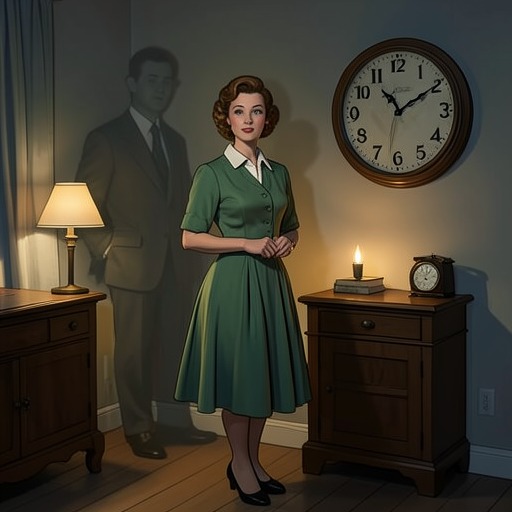
Rivington hospice
Doctor SleepRivington hospice is a care facility in Frazier where Dan Torrance works and where several of his most intimate encounters with death take place. Its rooms are rendered through concrete signs of illness—a barely rising chest, a saline drip, a rattling breath—but the hospice is also a place where patients can speak their fears and where Dan’s gift for attending the dying becomes practical care.
Setting and Work
Dan Torrance identifies Rivington hospice as his workplace when he meets Mrs. Gerard in Frazier. His work there gives the location its recurring shape: rather than a backdrop for recovery, it is a place where illness has reached its limits and companionship matters when treatment cannot change the outcome.
The rooms are individual and lived-in, not anonymous wards. Charlie Hayes lies in the Alan Shepard Suite with the sheet pulled to his chest and Azzie curled beside his hip. Concetta Reynolds is in Room 9, surrounded by photographs, many of them showing Abra Stone at different ages. These details keep a patient’s life visible alongside the medical signs of decline.
Charlie Hayes and the Work of Reassurance
When Dan enters Charlie Hayes’s room, the ninety-one-year-old is so thin and pale that Dan stands still for thirty seconds before he can be sure the man is breathing. There is crusted blood beneath Charlie’s nostrils and at the corner of his mouth. Charlie is conscious, frightened, and able to say that he had not expected to be scared. Dan takes his hand rather than checking his pulse, recognizing that there is no point in doing so.
Holding the hand opens a rush of Charlie’s remembered life: his twin sons on swings, his wife in their bedroom, a Farmall tractor beneath a striped umbrella, bacon and Frank Sinatra from a radio, and scenes of work, fishing, hunting, dancing, and raising a family. The images gather and blur as Charlie nears what Dan understands as the border. Charlie fears not hell but the possibility that death means nothingness. Dan answers by wiping his face with a damp cloth and reassuring him that people do not truly end, even though Dan cannot explain how or what that means. The encounter makes the hospice a place where tending to a dying body and responding to a patient’s deepest fear become inseparable.
Eleanor Ouellette and the Threshold of Death
In Autumn 2013, Eleanor Ouellette is the oldest resident of Rivington hospice at 102. Her severe illnesses include failing liver and lungs, colorectal cancer, and a dangerously weakened heart, yet she sits upright, strokes the cat, and keeps her permed hair and pink nightgown immaculate. Dan calls her Miss Oooh-La-La, playing on the elegant French pronunciation of her surname, and greets her with a playful compliment in French. Her presence complicates the easy equation of a terminal condition with immediate surrender: she appears composed even as Dan senses that her long life is nearing its end.
After Eleanor’s death, Dan sits beside her open-eyed, motionless body and sees the open mouth as an image of death’s silence. A voice addresses him through her, though her lips do not move. Dan wonders whether the speaker is Dick Hallorann or something impersonating him; the hospice scene leaves that identity uncertain. The room thus holds both an observable death and an encounter that Dan cannot confidently explain.
Concetta Reynolds, Fred Carling, and the Hospice’s Meaning
Concetta Reynolds’s room is marked by the absence of hopeful readings on the monitor and by a saline drip. Dan sees that her cannula has slipped and straightens it before taking her hand. Her breathing catches slightly. Their conversation is brief and mostly in Italian; at its end, Concetta manages to raise a hand, caress Dan’s stubbly cheek, and smile. When he asks if she is ready, she answers yes. The gesture and reply make her consent central to the scene: Dan accompanies her rather than deciding for her.
Later, Fred Carling’s breathing rattles loudly, and he looks to Dan for help. Dan tells him that Abra Stone, his niece, can take care of Brownie, then recognizes that he can help Fred in the way his work has taught him to. In the quiet hospice, with a door swinging open nearby, Dan tells Fred that he only needs to sleep. Across these encounters, Rivington hospice is defined less by a cure than by the presence of someone willing to stay, listen, touch a patient’s hand, and help make the final passage less frightening.